Today was an exciting and productive day at our little bee farm as we tackled the crucial task of pulling honey supers off some of our nine hives. This process is essential for ensuring that our bees have enough empty frames to store their freshly collected nectar, which eventually becomes the delicious honey we all love.
We had to remove four honey supers from our hives. For those unfamiliar with beekeeping terminology, a honey super is a box that holds several frames where bees store their honey. By removing these, and replacing them with frames that do not have honey stored we provide space for the bees to continue their work without running out of room.
The weather played a significant role in determining today’s activities. It was a bit cloudy, which turned out to be a blessing. The temperatures hovered in the upper 80s F, making it warm but not unbearably hot. Cloudy days can be preferable for working with bees as they are often less active and more docile when the sun isn’t blazing. The hives we pulled from today weren’t overly aggressive but a couple of the hives that we’ll tackle tomorrow may be a different story.
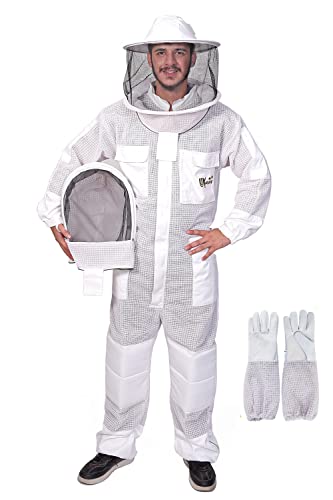
One important realization we had today was that our beekeeping suits are due for an upgrade. The elastic in our old jackets has lost its elasticity, increasing the risk of getting stung. Safety is paramount when working with bees, so investing in new suits will ensure we can continue our work comfortably and safely. This time I think we’ll go with a full suit. This will mean the only openings are those at our ankles and wrists. The wrists will be covered by gloves and the ankle portions can get covered by socks or high boots. Since our jackets have a tendency to “raise up” if you are moving your hands above your head or lifting heavy supers we have got stung several times in the past when bees find their way into our jackets. Nothing like getting stung and running around like crazy and realize the bees are in your suit, not on it.

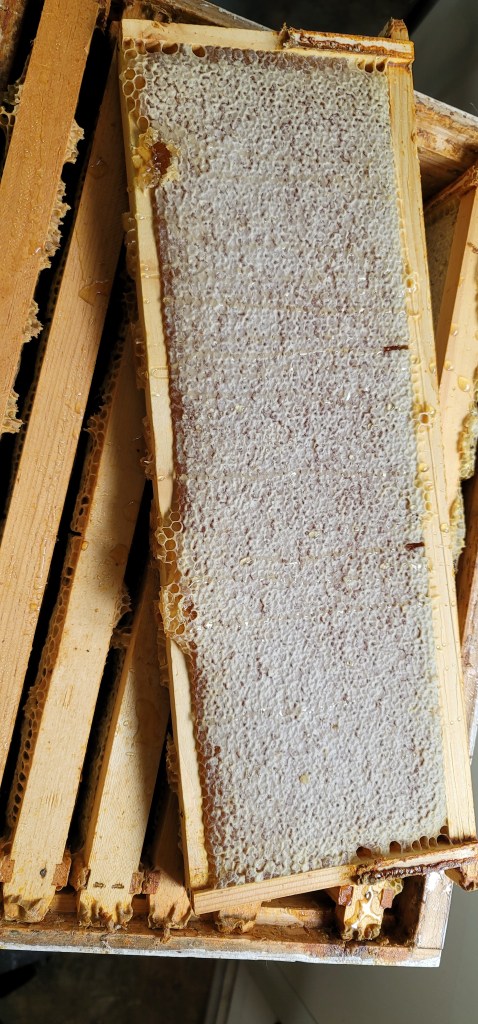
The Honey Harvest
After carefully pulling the honey-laden frames from the supers, the next step was to remove the wax caps that seal the honey in the comb. This process, known as uncapping, is done using a special tool or a trusty long bread slicing knife to gently slice off the wax layer without damaging the honeycomb.
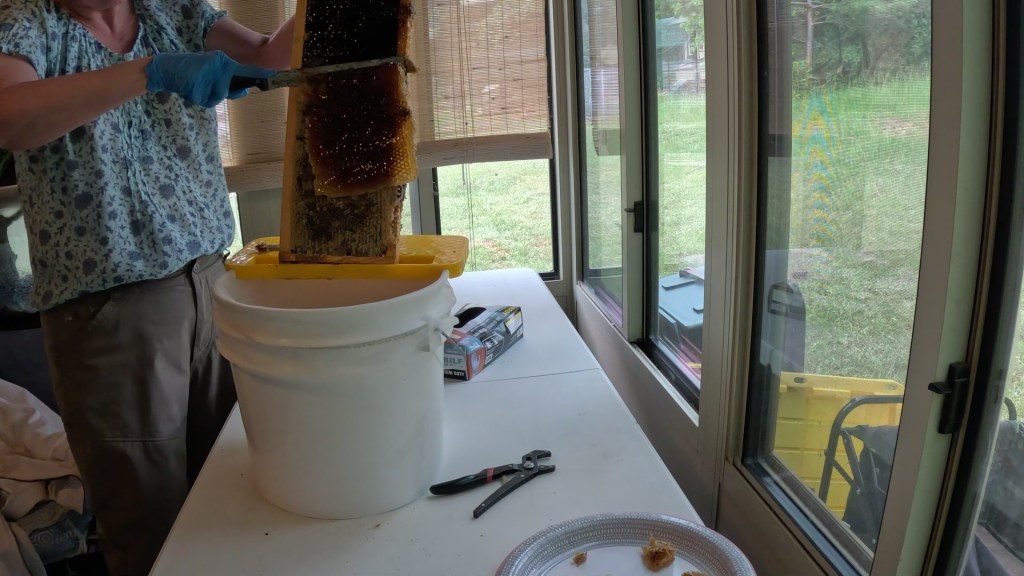
With the frames uncapped, it was time to use our honey extractor. This device spins the frames at high speeds, using centrifugal force to draw the honey out of the comb. It’s a fascinating process that efficiently separates the honey from the wax.
De-cap each side of the frame and repeat for 16 times. Over all we worked through the frames in about 2 hours. Then it was time to clean up. Honey and stickiness gets everywhere!
Our work doesn’t stop after extracting the honey. Over the next couple of days, we’ll be dedicated to straining and filtering the honey to remove any impurities or leftover bits of wax. This step ensures that the honey we bottle is pure and high quality. We do not heat or pasteurize the honey like some large companies. Rumor has it keeping it natural is great for allergies, especially if the honey is local to your area.
Once the honey is filtered, we’ll transfer it into jars. We take great pride in this final step, as these jars will soon be shared with friends who eagerly await this year’s harvest.
Today’s efforts were a perfect blend of hard work, attention to detail, and the joy of reaping the rewards of our bees’ labor. Beekeeping is a fascinating and rewarding endeavor, providing us with not only honey but also a deeper connection to nature and the essential role bees play in our ecosystem.
Getting started is a large investment and additional investments into equipment, hives, tools, and etc can get a bit pricey. We won’t get rich selling honey, but after about 3 years we’ve finally broke even on the initial investment into the 2 hives we started with and the extra gear we needed such as the jackets and vales. It will probably take another 6 years to cover costs of the additional 7 hives, the honey extractor, tools and etc.
Beekeeping is a lot of work and 8 frames full of honey tend to weight about 45-50 pounds each. They are just about at the limit of what I can lift safely due to my old back issues. Additional downsides to keeping bees in the area where we live is the heat and humidity during summer. We have to make sure we don’t overheat and stay cool. We wouldn’t want to pass out while working the hives! We also noticed that one of the bottom boards, the base that the supers sit on and where the bees enter and exit the hive, is starting to break. So tomorrows task will be to dismantle the hive, make a lot of bees very unhappy and attempt to repair the base before it collapses.
Fun times with bee keeping! Only one sting between us this time!
Time to order more jars!

Discover more from Campfire Exploring
Subscribe to get the latest posts sent to your email.
